Jun 1897·German Colonies
TogolandFirst Postage Stamp
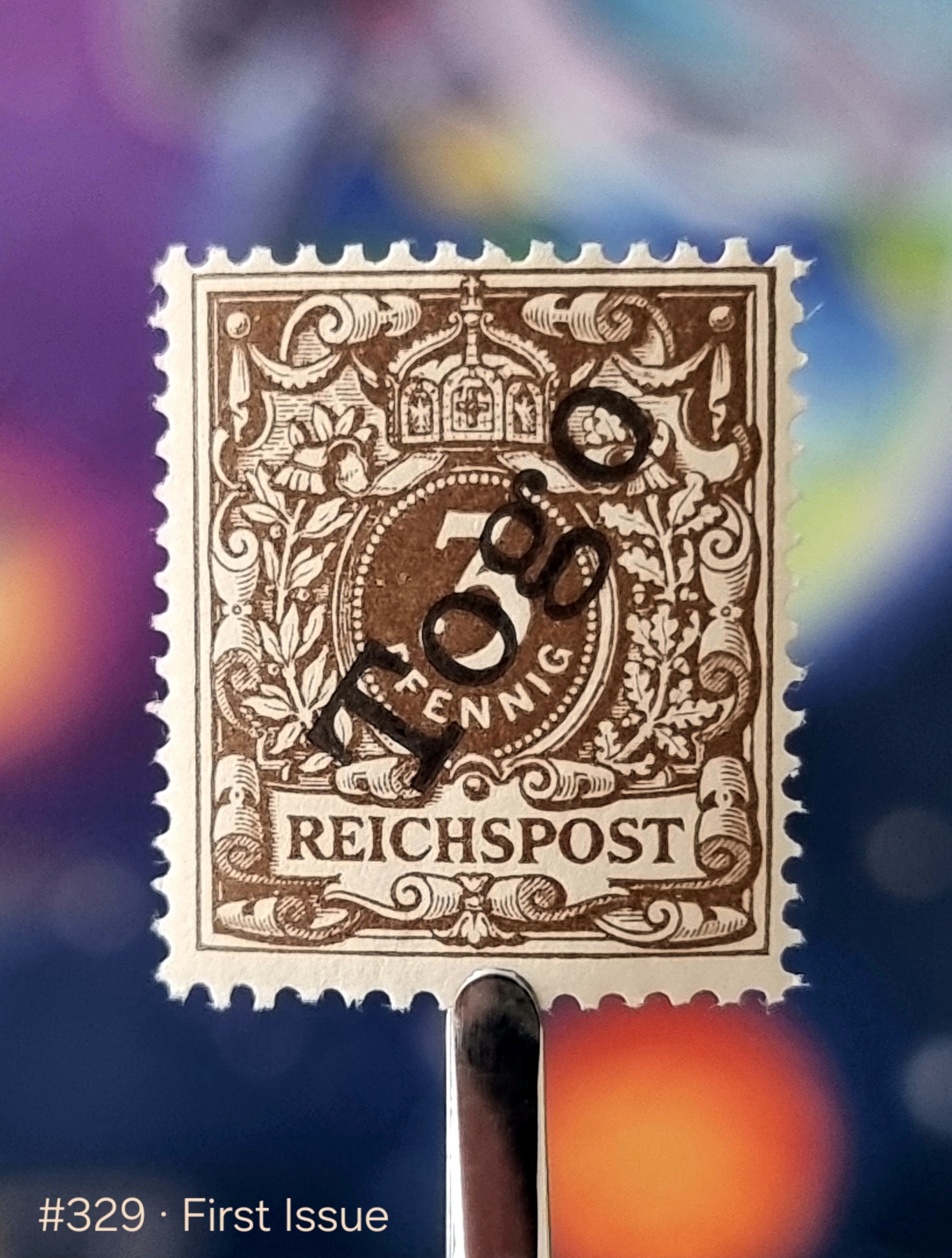
Germany’s only profitable colony
Togoland was one of Germany’s smallest African possessions, but also one of its most economically successful. By the early 20th century, it was largely self-financing and promoted by German authorities as a "model colony". Germany established the protectorate in 1884, between the British Gold Coast and French Dahomey. Investment followed in railways, roads and export agriculture, particularly cocoa, cotton and palm products. The "model colony" description needs context. Its economic success relied partly on taxation, compulsory labour and policies imposed on the local population, coming at a considerable cost to Togolanders. Postal services initially used ordinary German Imperial stamps, identifiable through postmarks such as KLEIN-POPO and later LOMÉ. In 1897 came the first dedicated issue: six contemporary German stamps, each overprinted diagonally Togo in black. No new design was created, the overprint transformed existing German stamps into Togoland’s first issue. Forgeries are common. François Fournier produced examples where both stamp and overprint are fake, while forged Togo overprints also occur on genuine German stamps. Details in the T and G can help with identification. For first-issue collectors, watch the 3pf brown. The September 1897 first issue is pale grey-brown. Yellow-brown and reddish-brown followed in 1898, then dark brown in 1899. Same design, but the shade separates the true first issue from later printings.
Stamp Origins on Instagram