1 Jan 1852·German States
BrunswickFirst Postage Stamp
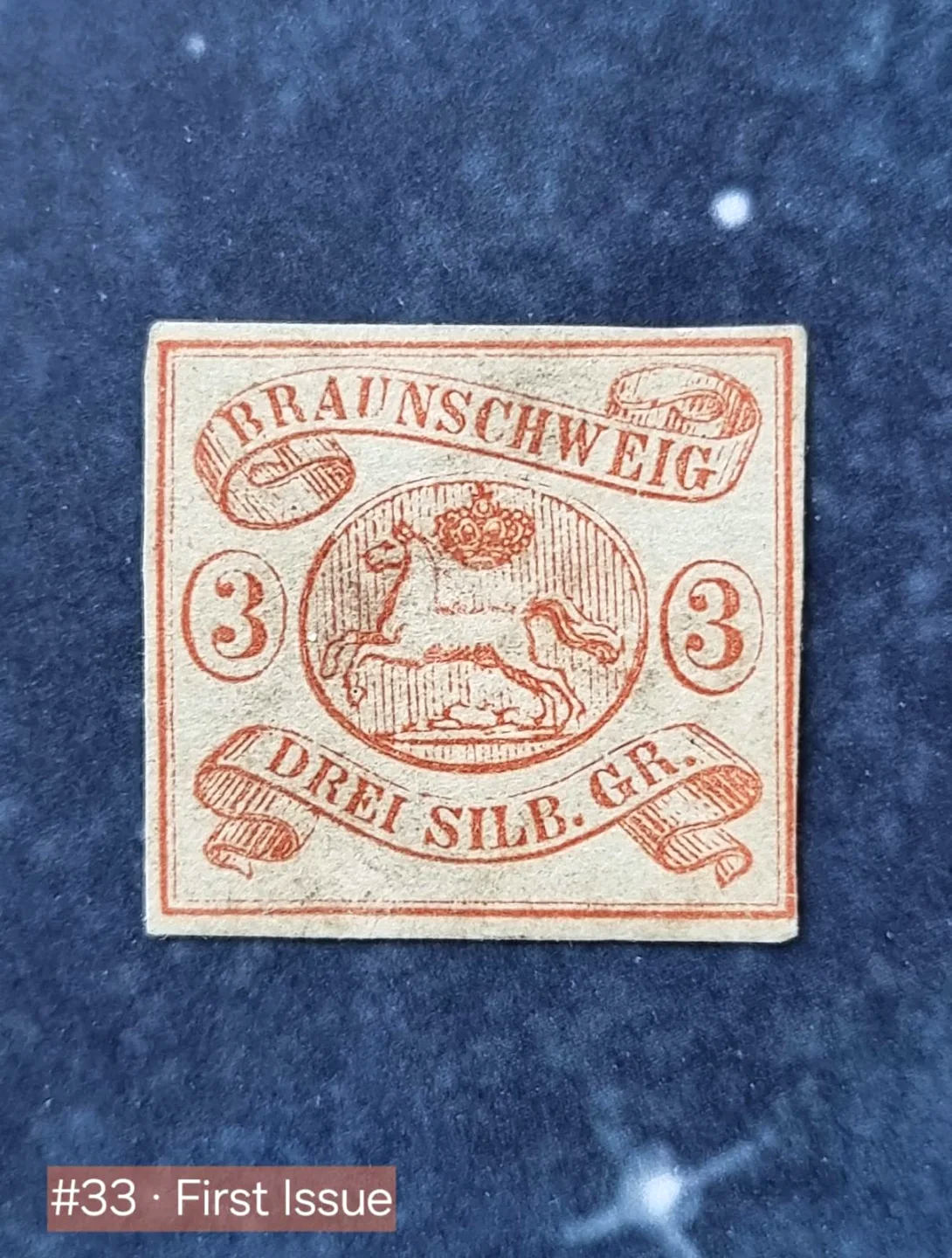
The running horse of the Duchy
In 1852, Brunswick was transforming from a medieval city into a rapidly industrialising capital of the Duchy of Brunswick. On the very first day of that year, the duchy issued its first postage stamps, becoming one of the early German states to do so. The design could hardly be more local. No monarch. No grand portrait. Just the proud Saxon horse of Brunswick, simple, bold and unmistakably regional. The first issue consisted of three imperforate typographed values: 1, 2 and 3 Silbergroschen. These earliest stamps were printed without watermark, while later Brunswick issues introduced a posthorn watermark. Like many classics, the design attracted forgers. Some imitations show the horse’s tail too close to the oval frame, distorted lettering in BRAUNSCHWEIG, or an oddly shaped G. Reproductions were also produced by well-known philatelic forgers such as Spiro and Fournier. Reprints exist too, adding another layer of complexity for collectors. Brunswick joined the North German Confederation postal system in 1868, bringing its independent stamp issues to an end. For about sixteen years, these little stamps carried the identity of an entire German duchy through one simple symbol: a running horse.
Stamp Origins on Instagram