1 Jan 1852·Italian States
Roman StatesFirst Postage Stamp
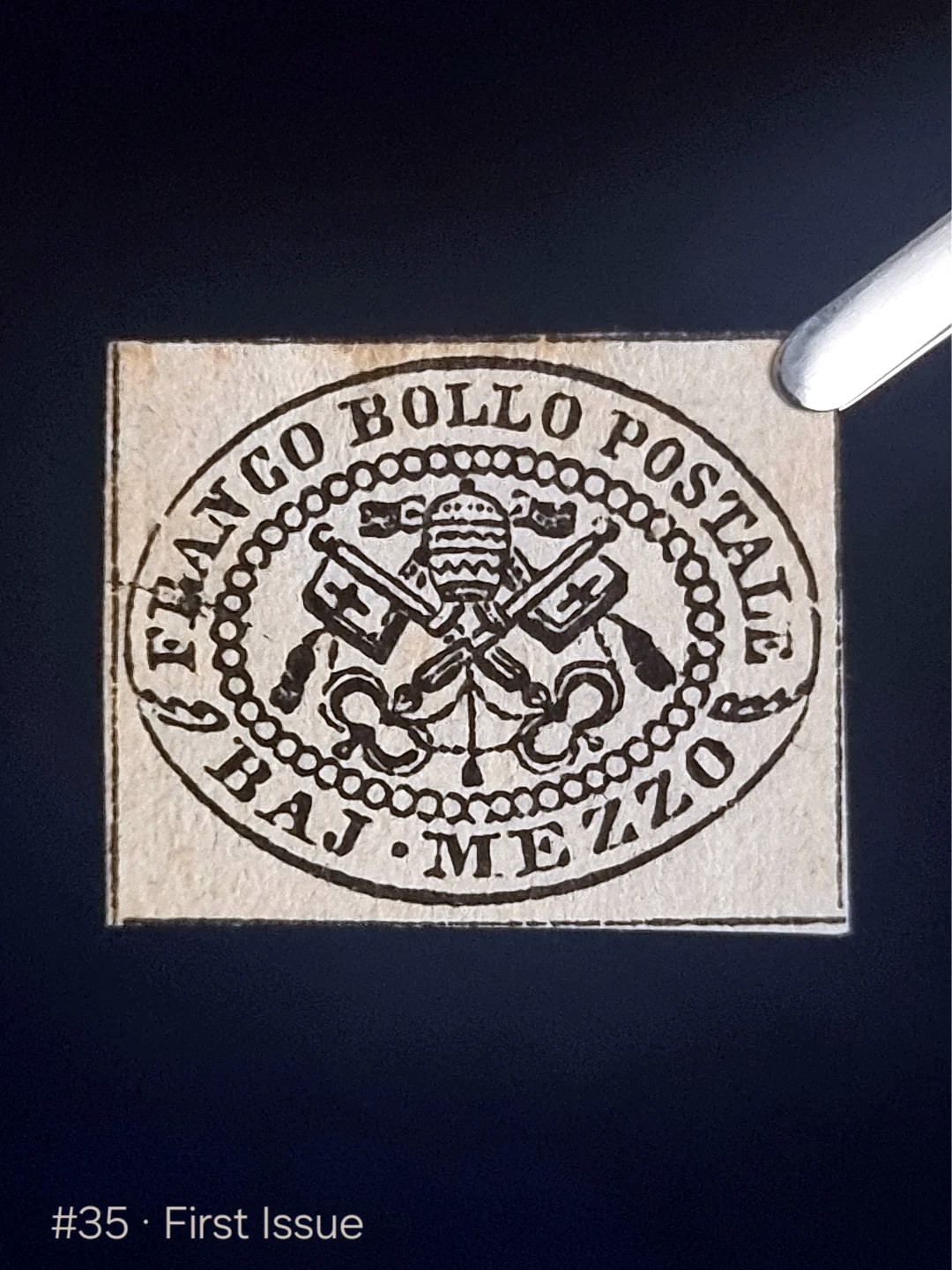
Keys of St. Peter
Imagine posting a letter in Rome at a time when much of central Italy was still ruled by the Pope himself. Church bells echoed through the streets, foreign pilgrims filled the roads to St. Peter’s Basilica, and political tension quietly simmered across Europe. It was into that world that, on Thursday 1 January 1852, the Papal States introduced their first postage stamps, issued under the authority of Pope Pius IX himself, who had approved the reform as part of a broader modernisation of the papal administration. Known as bolli franchi “franked stamps”, the issue featured the crossed keys of St. Peter beneath the Papal tiara, symbols of both spiritual and temporal authority. The very first set began with nine values ranging from ½ to 7 bajocchi, printed in black on coloured handmade paper. Later that same year, two higher values were added but printed on white paper this time. Often overshadowed by Vatican material, the stamps of the Roman States open the door to a fascinating world of shades, papers, reprints, and forgeries. Some collectors avoid them, assuming they are too difficult or expensive, but genuine examples are still surprisingly accessible if you enjoy the chase. Values of Roman States stamps vary tremendously according to condition. Ironically, a certificate will sometimes cost more than the stamp itself, which is perhaps why half the fun becomes learning to be your own expert.
Stamp Origins on Instagram