1 Jul 1901·British Colonies
Papua New Guinea
Lakatoi Canoe (Thick Paper & Horizontal Rosette Watermark)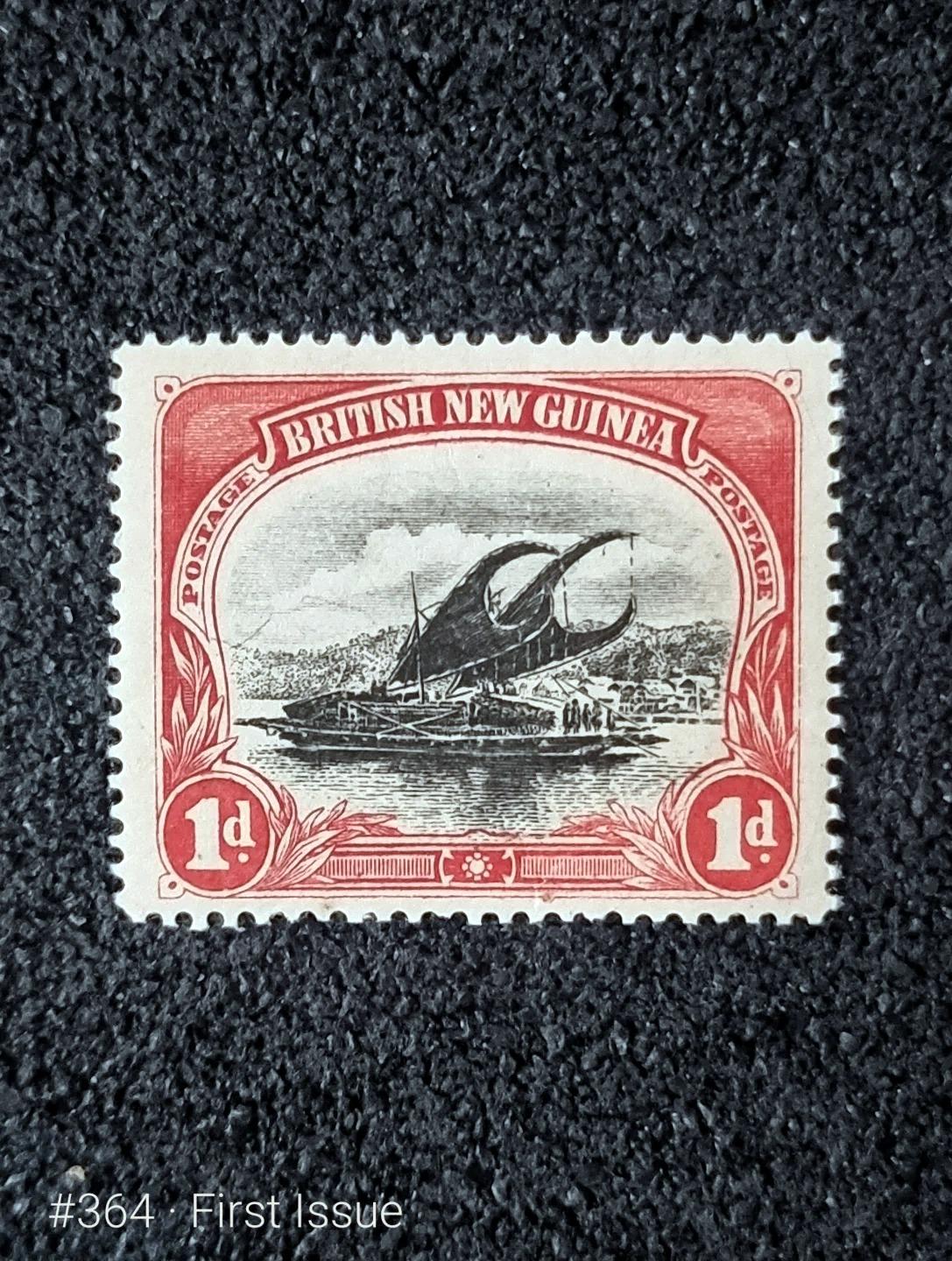
1d carmine — SG 2, Scott 2
Lakatoi Sails Out
On 1 July 1901, British New Guinea issued its first stamps. Instead of a royal portrait, they showed a Lakatoi sailing canoe, with a coastal village in the background. The set comprised seven values, from a halfpenny to one shilling. De La Rue printed the stamps in London using recess printing. The fine engraved lines bring out the canoe’s sweeping sails and the houses along the shore, framed here in carmine on the one-penny value. As first-issue specialists will tell you, the differences extend beyond colour and denomination. Paper thickness and the orientation of the rosette watermark help distinguish the printings. The earliest issue is on thick paper with a horizontal rosette watermark. When British New Guinea became Papua in 1906, existing stamps were overprinted with the new name. The Lakatoi design remained in use through successive issues until 1932, giving collectors decades of printing, watermark and overprint varieties to explore.