1 Jul 1852·Indian States
Scinde, India
Scinde Dawk (Embossed)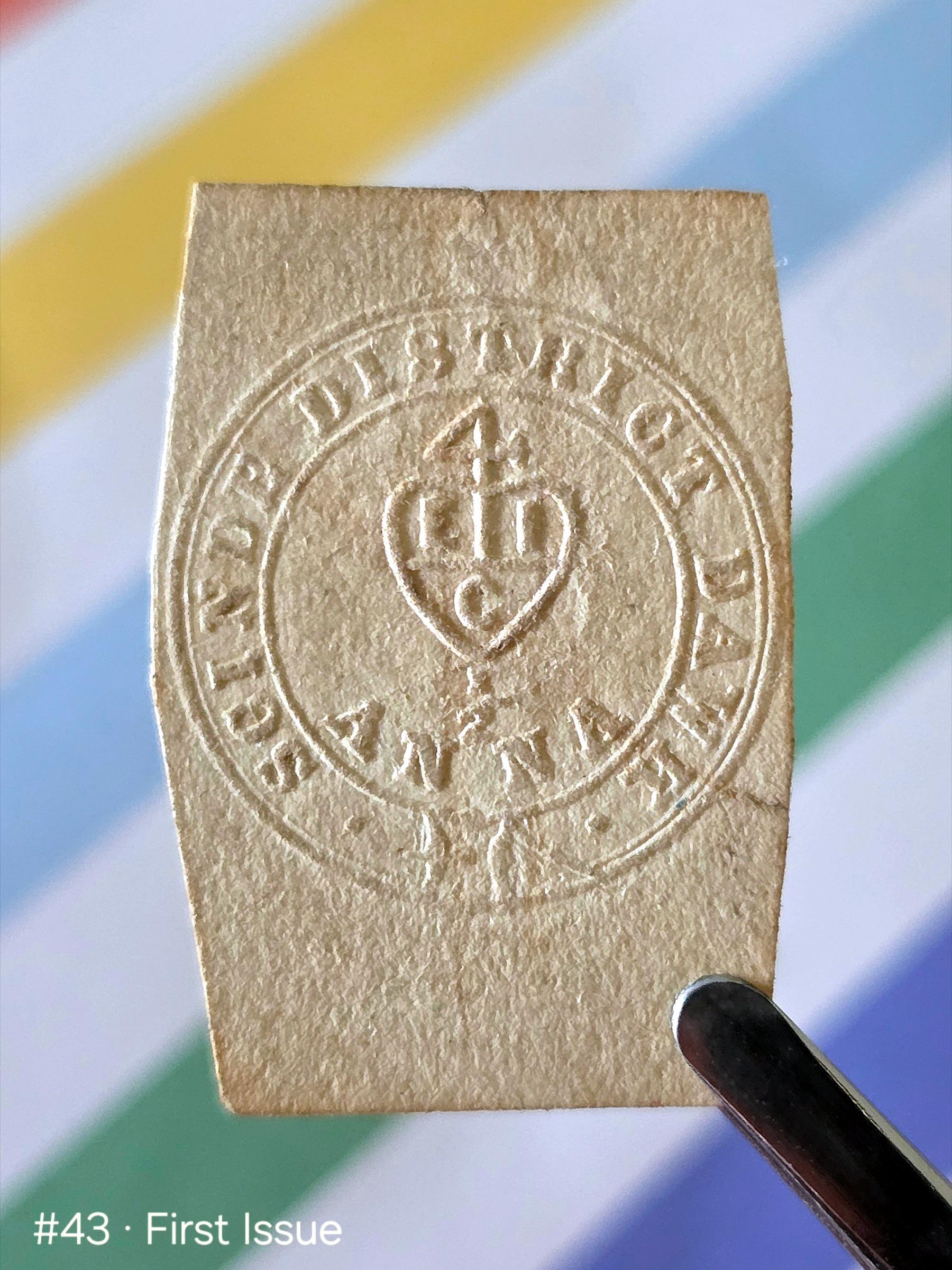
½ anna white with light manuscript cancellations — SG S1, Scott A1
Asia’s first stamps
Before any other part of Asia issued adhesive postage stamps, there were the Scinde Dawks. Small, circular and rather different from the stamps most of us picture today. They began with a postal reform in Scinde, now part of Pakistan. “Dawk”, or “dak”, refers to the post. An older network of runners gave way to horses and camels, while Sir Bartle Frere introduced a cheap, uniform postage rate regardless of distance. The first stamp, issued on 1 July 1852, was a ½ anna design embossed on a red sealing wafer backed with paper. Striking, but fragile. The wafers cracked easily, and examples used to seal letters could be destroyed simply by opening the envelope. Quite a challenge for anyone hoping to collect one more than 170 years later. The white version solved the brittle-wafer problem, but postal clerks struggled to see it by candlelight, particularly on white envelopes. At its centre is the East India Company’s merchant’s mark. The white version uses blind embossing: no ink, just a raised impression forming the lettering and design. What you see comes from light and shadow. A blue version followed, combining colour with embossing to make the design easier to see. Forgeries are plentiful, and some are embossed too, so a raised design alone is no guarantee of authenticity. Incorrect lettering, such as “ETC” instead of “EIC”, can expose some fakes, but convincing examples need expert examination. I would personally only buy one with a certificate of authenticity. The Scinde Dawks were withdrawn in 1854 as the first general issue for British India arrived. Asia’s first adhesive stamps, three attempts to make them practical, and a remarkable and scarce little piece of postal history.