26 Jul 1854·British Colonies
India, East India CompanyFirst Postage Stamp
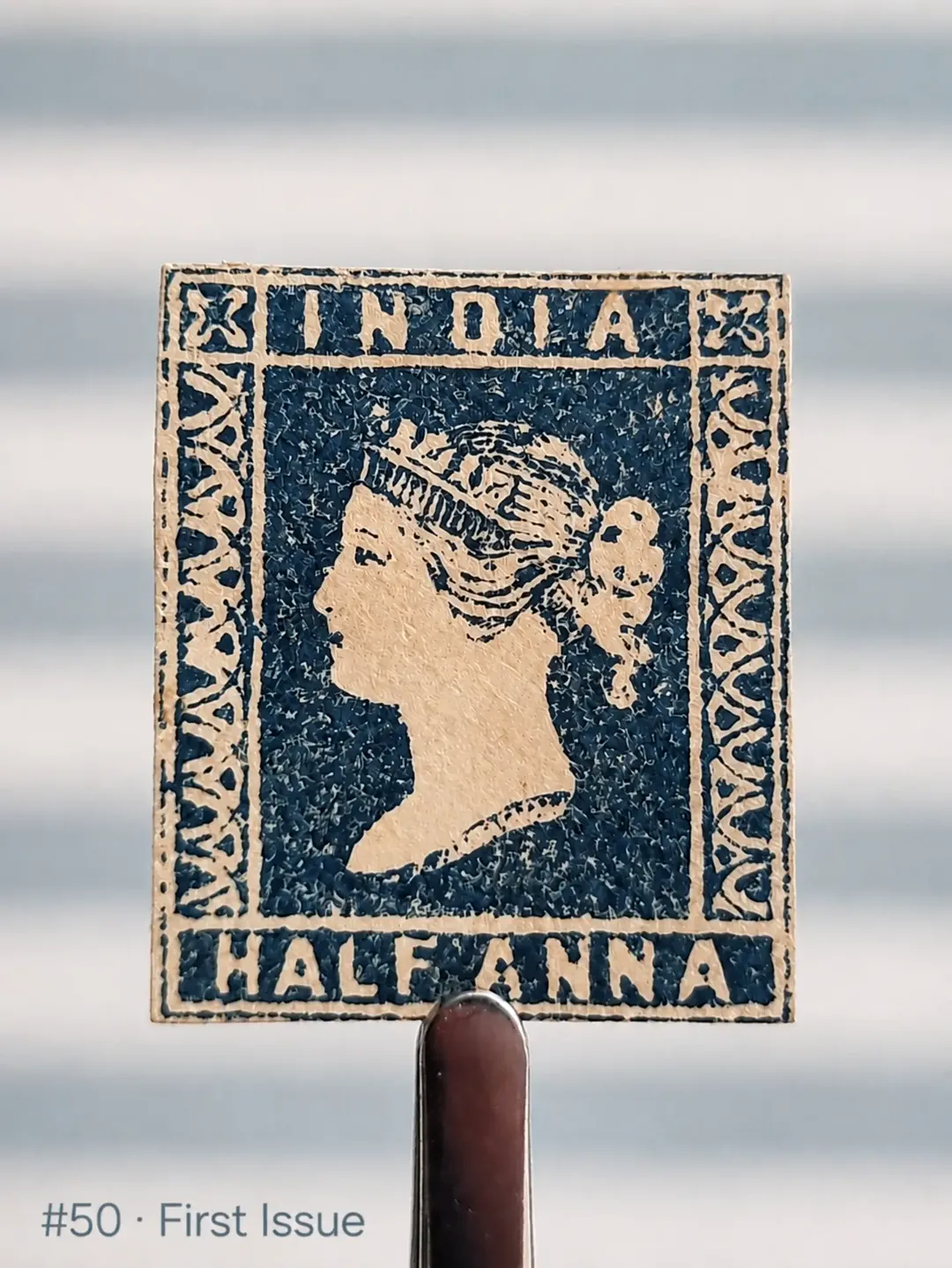
Asia’s first adhesive stamp
In 1854, India made postal history with the first adhesive postage stamps issued in Asia. Produced under East India Company administration, they were lithographed locally in Calcutta at the Surveyor-General's Office rather than printed in London, a remarkable achievement for the time. The first design prepared was a ½ anna red, but it was never officially issued. Instead, the ½ anna blue in Die I shown here became the first stamp to see postal use a few months later. The Die I version is recognised by Queen Victoria's weaker chignon detail. Printed on thin paper in mid-1854, blurred impressions and poor centring were the norm, giving these stamps a rugged beauty that I personally enjoy collecting. The set soon expanded with the 1 anna red, 2 annas green, and the famous 4 annas bi-colour in red and blue, the world's first bi-coloured postage stamp and one of philately's greatest icons. Many reprints were made for collectors, although their designs differ noticeably from the genuine stamps. Hundreds of proofs and essays also exist, alongside unofficial reprints by Moens and forgeries by Spiro, Fournier, Sperati, Peter Winter, and others. Specialists recognise three dies of the ½ anna, introduced over the following year as Queen Victoria's portrait was strengthened with finer lines and shading. For collectors of postal "firsts", there is a pleasant surprise: the inaugural Die I ½ anna blue remains the most affordable of the three dies, despite marking the birth of Indian philately and the first adhesive postage stamp issued in Asia.
Stamp Origins on Instagram