1 Jul 1935·India, Native Feudatory States
Bijawar
Maharaja S. Singh Bahadur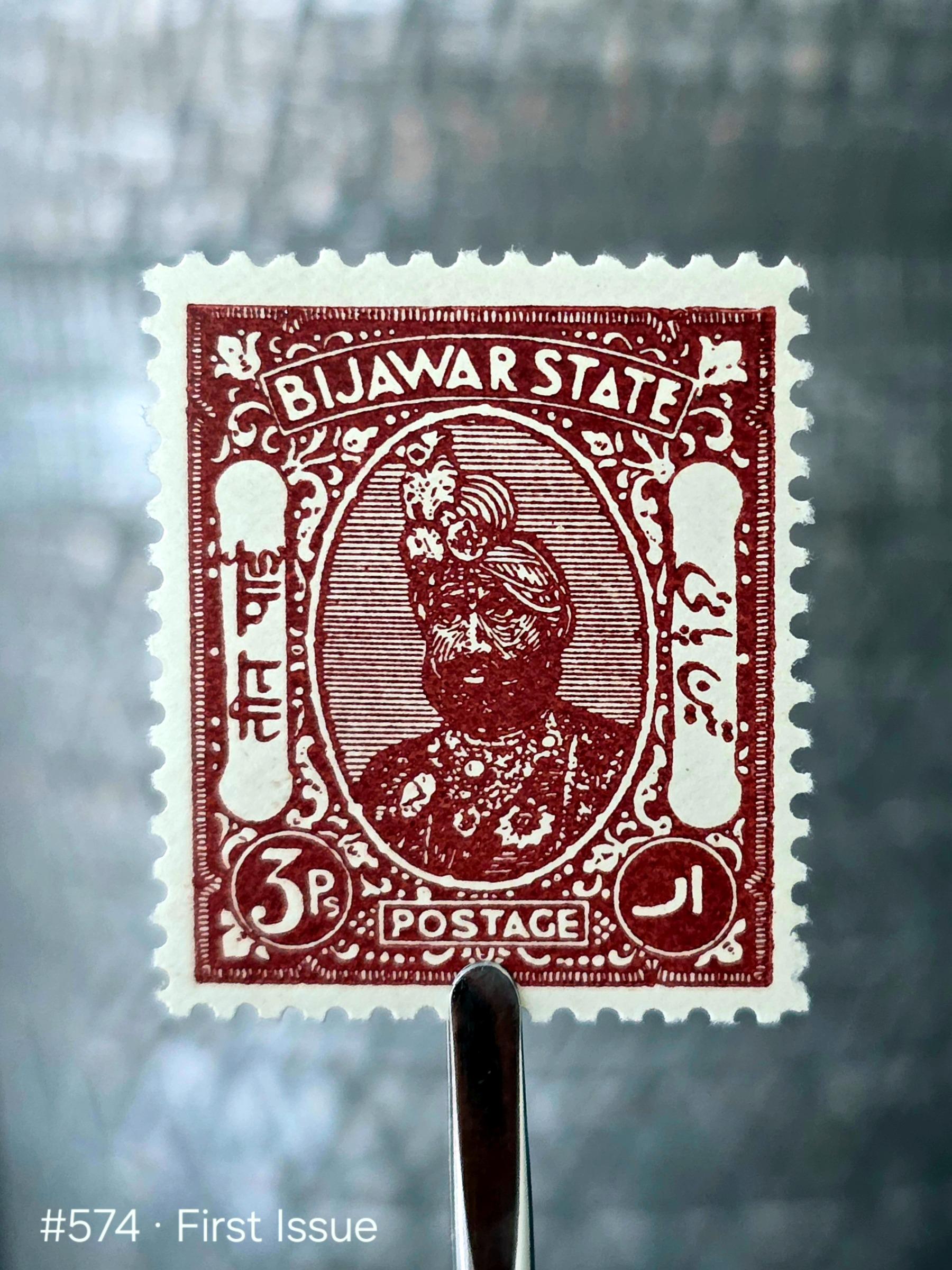
3p brown perforated 11 — SG 1
A maharaja and a shared printer
By 1935, postage stamps had been around for 95 years. Bijawar was only just issuing its first. This small princely state in central India, now part of Madhya Pradesh, introduced five values on 1 July 1935. Each featured Maharaja Sawant Singh Bahadur, placing the local ruler’s portrait on stamps valid within his own state. There is an interesting family connection here. Sawant Singh was born into the ruling family of neighbouring Orchha before being adopted into Bijawar’s dynasty. In 1935, both states had stamps printed by the same Bombay firm, Lakshmi Art Printing Works. Printed by letterpress and perforated 11, Bijawar’s first set came with production irregularities. Missing rows of perforations left some stamps joined together, while others escaped perforation entirely. In 1936, the same five designs returned, this time rouletted 7: small cuts instead of punched holes. For first-issue collectors, that distinction matters. The portraits and values look the same, but the perforated set came first. A small state whose stamps reward a closer look, right down to their edges.